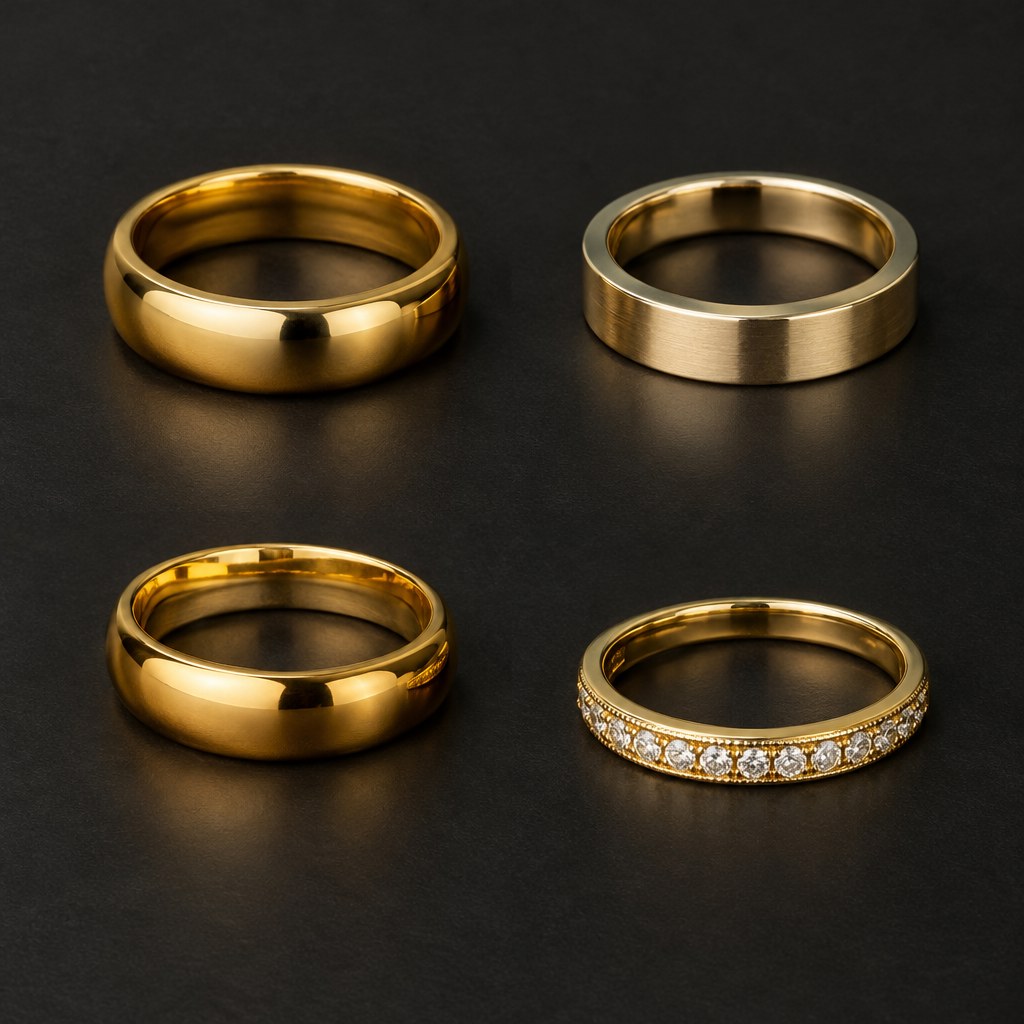
Have you ever looked inside a gold ring or at the clasp of a necklace and noticed a tiny number stamped into the metal? Perhaps you’ve seen 10K, 14K, 18K, or 24K. These markings can tell you something important about your jewelry, but they don’t tell the entire story.
At GoldWiser, we believe customers should understand what they own before deciding whether to sell.
What Does Karat Mean in Gold Jewelry?
Karat, abbreviated K, measures gold purity. Pure gold is described as 24-karat gold. Lower-karat jewelry contains gold combined with other metals, called alloys. These metals influence hardness, durability, color, and suitability for everyday wear.
What to Bring When Comparing Gold Purities
If you have several pieces, keep each item separate and photograph its markings. A 14K stamp generally indicates a different gold proportion from an 18K stamp, but markings alone cannot establish authenticity. Do not scratch or acid-test jewelry at home. An in-person evaluation considers verified composition, actual precious-metal weight, and current market conditions. For related guidance, see how to identify real gold jewelry.
10K, 14K, 18K, and 24K Gold Compared
Each karat level describes a proportion of gold in the alloy, not a guaranteed resale price. Compare purity alongside actual metal weight, construction, and condition. For preparation tips, explore our Gold & Jewelry Guides and broken jewelry guide.
10K Gold — Everyday Durability
10K gold contains approximately 41.7% pure gold. Its higher proportion of alloy metals can make it practical for frequent wear.
14K Gold — A Popular Balance
14K gold contains approximately 58.3% pure gold and is widely used in rings, necklaces, and bracelets.
18K Gold — Higher Gold Content
18K gold contains 75% pure gold and is commonly associated with fine jewelry.
24K Gold — Nearly Pure Gold
24K describes gold at or very near pure gold content. It is relatively soft compared with many jewelry alloys.
Gold Purity Comparison
| Gold type | Approximate gold content | Common uses |
|---|---|---|
| 10K | 41.7% | Everyday jewelry |
| 14K | 58.3% | Rings, chains, bracelets |
| 18K | 75% | Fine jewelry |
| 22K | 91.7% | Traditional jewelry, some coins |
| 24K | Nearly 100% | Bullion, high-purity jewelry |
These percentages describe metal composition, not buyer payout rates.
What Do 417, 585, 750, 916, and 999 Mean?
Three-digit fineness marks can indicate gold content: 417 is associated with 10K, 585 with 14K, 750 with 18K, 916 with 22K, and 999 with very high-purity gold. A stamp alone does not guarantee authenticity; professional testing helps verify composition.
Is White Gold Real Gold?
Yes. White gold contains gold alloyed with other metals for a lighter appearance. Rhodium plating may create a bright white surface. Color alone does not establish purity.
What About Rose Gold?
Rose gold gets its pinkish color primarily from copper in the alloy. Like yellow and white gold, it can have different karat purities.
Is Gold-Plated Jewelry the Same as Solid Gold?
No. Gold-plated jewelry has a surface layer of gold over another material. Gold-filled and gold-vermeil items have different construction standards and should not be confused with solid gold alloys. Markings may include GP, GEP, HGE, or GF.
Why Can Two 14K Gold Rings Be Evaluated Differently?
Two rings with the same nominal purity may differ in metal weight, non-gold components, gemstones, construction, and other characteristics. Purity is only one part of an evaluation.
Can You Identify Real Gold at Home?
Hallmarks and signs of wear provide clues, but common home tests are not always reliable. Magnet tests cannot conclusively prove authenticity, and scratching or chemical testing can damage jewelry.
Why Purity Matters When Selling in The Woodlands
Precious-metal prices fluctuate, and buyers must examine actual items before making an offer. GoldWiser does not provide purchase-price quotes over the telephone. Evaluations take place in front of customers, providing opportunities to observe and ask questions.
Frequently Asked Questions
Is 18K always more valuable than 14K?
Not necessarily. Total precious-metal content, weight, and other characteristics matter.
Can real gold have no markings?
Yes. Age, wear, repairs, or manufacturing practices may explain missing markings.
Does gold lose purity with age?
Ordinary aging does not inherently change the purity of an intact alloy, although alterations may affect an item.
Can broken gold still be valuable?
Yes. Damaged jewelry may retain precious-metal value.
Have Gold Jewelry Evaluated Near The Woodlands
GoldWiser welcomes customers with gold jewelry and other precious metals for professional in-person evaluations. There is no obligation to sell simply because you have an item evaluated. Call (713) 568-2468 Ext. 202 — Ask for Gina.